Read More

Your shopping bag is empty
Go to the shop
Carbon fiber is known for its performance, precision, and advanced engineering. From superbikes to high-end automotive accessories, carbon fiber parts elevate any vehicle with a premium, race-inspired look while offering lightweight strength and lasting durability.
Carbon fiber instantly creates a bold, distinctive look for superbikes, cars, and accessories.
Many buyers don’t realize that a part that looks like carbon fiber may not actually be carbon fiber. As the saying goes, "All that glitters is not gold." Just because it looks like carbon fiber does not mean it actually is.
The market is crowded with “carbon-style” products: plastic or fiberglass parts with printed patterns, vinyl, or hydro-dipped finishes designed to mimic carbon fiber. At a glance, they look nearly identical, i.e., glossy, impressive, and typically available at a lower cost.
The reality lies below the surface. Real and fake carbon fiber differ drastically in appearance, strength, weight, durability, and value.
Understanding these distinctions is crucial, especially as you navigate the range of carbon fiber parts available. Let's explore why being able to distinguish real from fake carbon fiber is so important.
Real Carbon fiber is far more than a stylish finish. It is a high-performance material originally engineered for aerospace and professional motorsport applications. The main focus was to reduce weight, increase strength, and improve efficiency under extreme conditions. The purpose was never just to look good, but to provide quality.
When you choose real carbon fiber, you're paying for engineering, precision, and long-term reliability, not just appearance.
Knowing the difference between genuine and fake carbon fiber matters because of:
Weight Savings – Real carbon fiber is much lighter than steel or fiberglass, which means your bike feels quicker, handles sharper and reacts instantly on the road.
Strength – In addition to being lightweight, carbon fiber is incredibly strong, giving your bike solid support without unnecessary weight.
Durability – Quality carbon fiber won’t rust or degrade easily, unlike cheaper materials, and lasts longer, especially when you ride in harsh weather or rough conditions.
Resale Value – Genuine carbon fiber retains its value better, so your bike stays worth more. And therefore, buyers are willing to pay more for real quality.
Safety – The most important factor is safety. Fake or weak materials can break at high speeds or on rough roads, severely compromising your bike’s performance and your safety.
Real carbon fiber withstands high heat, making it ideal for parts near the engine or exhaust. Fake materials can warp or deform under heat.
Recognizing fake carbon fiber not only protects your investment but also ensures your vehicle's optimal performance, durability, and safety. Next, let's look more closely at how to identify the key visual traits of authentic carbon fiber.
Real carbon fiber has a distinct, precise woven pattern. The fibers are woven together before resin is applied and cured, giving it a premium look and structural strength. This process creates a very different appearance that is extremely difficult to replicate with cheap imitations.
All these things work together to create the signature look of genuine carbon fiber. When you shift the part under light, real carbon fiber reflects uniquely because its weave sits below a clear resin layer, producing an almost 3D depth effect. This natural game of light helps us to differentiate between the real and the fake.
To understand this better, it’s helpful to compare it with forged carbon fiber. Forged carbon fiber looks different from woven carbon. Instead of a uniform pattern, it has a random marbled appearance made from chopped carbon fibers. But even forged carbon has depth and structure, unlike a printed design.
Many products in the market mimic the appearance of carbon fiber but do not offer the same performance benefits. These alternatives are usually made from cheaper materials designed to replicate the woven look without the strength or weight advantages of real carbon fiber. The duplicates are created to achieve greater profit with less investment. People are unaware of the false products that take over the place of real carbon fibers. And because they lack knowledge, they don’t know how to guess and pick the real one from the whole group. The materials may look convincing from a distance, but they lack the structural strength, lightweight properties, and durability that genuine carbon fiber provides. It is very important to know how to check for false products.
Here are some of the products that are used in the name of real carbon fiber:
1. Fiberglass with Carbon Fiber Finish:
Fiberglass is commonly used as a base material because it is more affordable and easier to produce. To give it the appearance of carbon fiber, manufacturers often add a carbon-style pattern or a thin decorative carbon layer on the surface. Although fiberglass can still provide decent strength, it is heavier and does not deliver the same lightweight performance and durability as genuine carbon fiber.
How to identify it:
Trouble with Fiberglass:
2. Carbon Fiber Vinyl Wrap:
Vinyl wraps are adhesive sheets with a printed carbon fiber texture. These wraps are usually applied over plastic, metal, or fiberglass parts to create the appearance of carbon fiber. They are purely cosmetic and provide no structural strength or weight reduction.
How to identify it:
Trouble with Vinyl Wrap:
3. Hydro-Dipped Carbon Pattern:
Hydro dipping, also known as water transfer printing, involves transferring a carbon-style pattern onto a part using water and special films. The result can look realistic, but the pattern is only a surface print and not an actual carbon fiber weave.
How to identify it:
Trouble with Hydro-Dipped:
4. Plastic or ABS with Carbon Print:
Some parts are made entirely from plastic or ABS and then coated with a carbon fiber pattern or finish. These products are inexpensive and often used for visual upgrades, but they do not provide the strength, durability, or lightweight advantages of real carbon fiber.
How to identify it:
Trouble with ABS with Carbon Print:
The market is full of products labeled as “carbon fiber look,” “carbon style,” or simply “carbon.” The wording can be confusing.
Before comparing, understand this:
Real carbon fiber = structural carbon weave + resin cured under pressure.
Fake carbon fiber = plastic, fiberglass, or metal with a carbon print or vinyl overlay.
The Real Carbon Fiber is structured to avoid a basic look. It has a distinct, specific look. Once you've seen the real one, it’s very easy to differentiate between the two.
Here’s what the Real Carbon Fiber typically looks like:
1. Weave Pattern:
The pattern is woven, not printed. Real carbon fiber consists of strands woven together, resulting in a tight, perfectly aligned appearance.
You can usually see:
2x2 twill weave – This weave features diagonal lines that form a subtle wave effect across the surface, commonly found on premium motorcycle and supercar parts. The pattern appears uniform and slightly textured, highlighting the depth of the carbon fiber.
Plain weave – This pattern resembles a square checkerboard, with strands crossing at right angles, resulting in a straighter, highly symmetrical finish.
The important part is that the spacing is consistent, the lines are sharp, and nothing looks stretched or blurry.
2. Depth:
Real carbon has real depth, and the fake one has a shiny surface. You can see the layers beneath the clear coat. When light hits the carbon fiber, the weave shimmers and shifts slightly. It looks 3D from certain angles, which helps us distinguish real carbon fiber from fake.
3. Light Reflection:
Real carbon often reflects light dynamically. The reflection will change as you move the part. And you can see the different shades, as some will appear darker and others lighter, depending on the angle. Talking about the duplicate Carbon Fiber, the reflection always stays the same. The pattern does not shift with the light. In the Printed or Hydro-dipped Carbon, the look is like a graphic under a clear paint.
4. Edges & Finishing:
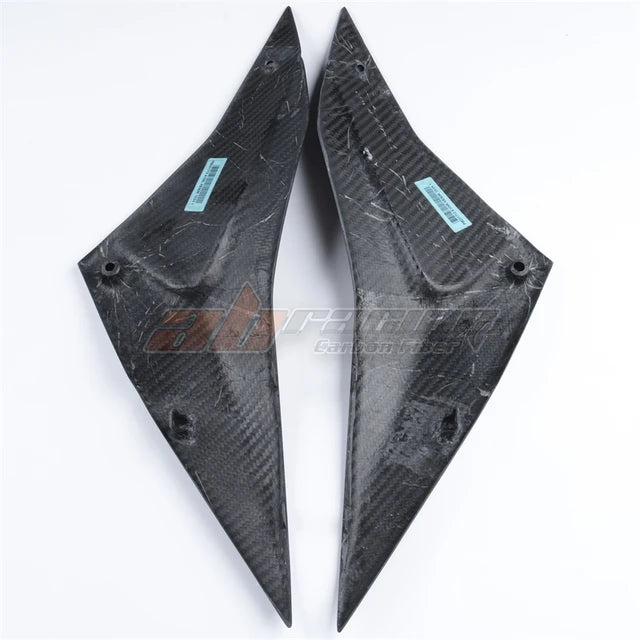
If you look at the edges of real carbon fiber, you can actually see that it’s made in layers. The sides may show thin fiber lines under the clear coat, indicating that the entire part is made of carbon, not just covered with it. This is a clear sign that the material is fully Carbon Fiber and not just a layer of it. Even the mounting holes look strong and properly finished. While talking about the fake carbon, the edges usually tell the truth. You might see plain plastic underneath, or it may look like a sticker or printed film stuck on top. It doesn’t look like a single material; it looks covered, not built.
5. Weight and Feel:
Real carbon fiber is extremely lightweight. It is very rigid and stiff when tapped. The real one feels solid and premium. And the main factor is that it feels cooler to the touch than regular plastic. Fake carbon signs: They are often heavier. They have flexible properties like plastic. And moreover, it feels hollow and cheap.
6. Pattern Consistency on Curves:
Real carbon weave follows body lines naturally. It doesn’t seem different or overlapped. The pattern stays proportional not only on the body but also around the bends. Real ones don't stretch unnaturally. In Fake Carbon, the pattern may stretch or bend near corners. The alignments give you a hint as they may look uneven.
Below is a simple comparison table to help you understand clearly between the real and the false one:
|
Feature |
Real Carbon Fiber |
Fake Carbon Fiber (Hydro Dip / Vinyl / Print) |
|
Material |
Woven carbon strands + resin |
Plastic, ABS, fiberglass, or metal |
|
Weight |
Extremely lightweight |
Similar to plastic or original material |
|
Strength |
High strength-to-weight ratio |
No structural strength benefit |
|
Pattern |
Consistent, deep, 3D weave |
Flat printed pattern |
|
Edges |
Pattern continues through edges |
Pattern stops at surface |
|
Price |
Expensive |
Much cheaper |
|
Heat Resistance |
Good heat tolerance |
Can peel, bubble, or fade |
|
Repairability |
Can be sanded and re-cleared |
Cannot be repaired easily |
Buying carbon fiber requires attention. Carbon fiber parts are popular because they are lightweight, strong, and give bikes a premium racing aesthetic. However, many products in the market only imitate the appearance of carbon fiber and are not actually made from real carbon fiber. These parts may look similar at first, but don’t offer the same strength or quality. That’s why it’s important to know how to spot genuine carbon fiber before buying. A few simple checks can help you avoid fake or low-quality products.
Here’s how you can verify authenticity before making a purchase.
One of the simplest and most reliable ways to identify genuine carbon fiber is to carefully examine the weave pattern. Authentic carbon fiber is made by weaving carbon strands together before they are bonded with resin. This process forms a clear, repeating fiber pattern that is structured and consistent across the surface.
What is a Carbon Fiber Weave?
A carbon fiber weave is the pattern created when thousands of extremely thin carbon strands are woven together to form a fabric, which is then shaped into a final part. These fibers are then combined with resin and hardened to create strong, lightweight components used in motorcycles, cars, aerospace parts, and performance equipment.
The weaving process is important because it determines how the fibers are arranged and how the material distributes strength across the surface. Different weave styles also give carbon fiber its recognizable appearance.
We have various types of weaves :
Fake Carbon Fiber Weaves:
Fake carbon fiber often relies on printed textures, stickers, or coated plastics that imitate the pattern. When viewed closely, these materials may look flat, overly uniform, or slightly blurry. Instead of real woven strands, the design may appear like a repeating graphic.
Another clue is how the weave behaves around edges, curves, and corners. Genuine carbon fiber maintains the natural flow of the fibers across the part, while fake versions often show distorted patterns, breaks, or stretching where the material bends.
By performing a quick weave pattern check, you can often determine whether a product is made from true carbon fiber or simply designed to mimic its appearance.
One of the easiest ways to verify real carbon fiber is by inspecting the edges, cut sections or mounting points of the part. Genuine carbon fiber components are made from multiple layers of carbon fiber fabric bonded together with resin. Because of this layered construction, the edges often reveal thin stacked layers of woven fibers, especially where the material has been trimmed or cut.
In contrast, many imitation parts only apply a carbon fiber pattern on the surface of plastic or fiberglass. When you look closely at the edges of these products, you may notice plain plastic, molded material or a smooth black covering rather than visible fiber layers. If the carbon fiber pattern disappears at the edges and exposes a plastic base, it is a strong sign that the product is not made from real carbon fiber.
Carbon fiber is widely known for its exceptional strength-to-weight ratio. This means that real carbon fiber parts are significantly lighter than many traditional materials while still maintaining high durability and stiffness.
When handling a carbon fiber component, it should feel surprisingly light for its size. Performance parts made from carbon fiber are often noticeably lighter than metal equivalents and can even be lighter than fiberglass in some cases.
If a part labeled as carbon fiber feels unusually heavy, thick or dense, it may actually be made from plastic, fiberglass, or another composite material with only a cosmetic carbon fiber layer. Weight alone does not always confirm authenticity, but it can provide an important clue when combined with other visual checks.
Most real carbon fiber parts are finished with a high-quality clear resin or protective clear coat that enhances the appearance of the weave and protects the fibers from environmental damage, such as UV exposure.
A genuine carbon fiber finish typically appears smooth, glossy, and evenly applied. The weave pattern should look sharp and well defined beneath the clear layer, with no hazy spots or distortions.
On cheaper imitation products, the clear layer may reveal several signs of lower quality. You might notice cloudy finishes, uneven gloss, visible printing beneath the surface, or small bubbles trapped in the coating. This is so because fake carbon fiber often uses printed patterns rather than real woven fibers; the clear coat can sometimes make the graphic look flat or artificial.
Reputable carbon fiber manufacturers are usually transparent about how their products are made. High-quality brands often provide detailed information about the materials and processes used to produce their components.
For example, a genuine manufacturer may mention techniques such as vacuum infusion, compression molding, or autoclave curing, which are common processes used to produce strong, lightweight carbon fiber parts. They may also provide close-up product photos that clearly show the weave pattern and fiber quality.
In addition, trusted brands often explain the type of carbon fiber used, the construction method, and the protective coatings applied. Many will also offer warranties or quality guarantees, which demonstrates confidence in the durability of their products.
When a product listing focuses only on the appearance of carbon fiber without explaining the materials or manufacturing process, it may indicate that the part is designed primarily for cosmetic purposes rather than genuine performance.
Before buying, ask:
Is this full carbon fiber or an overlay?
The seller should clearly state that the product is 100% real carbon fiber. If the customer finds anything like “carbon fiber overlay,” “carbon fiber style,” or “carbon look”, this simply means that the product has a thin cosmetic layer and is not fully carbon fiber.
What manufacturing process is used?
To know that the manufacturer is genuine and is selling you the right product, he will share the answer in terms of autoclave curing, vacuum infusion, compression molding, or prepreg carbon fiber construction, which ensures the products are real carbon fiber manufactured.
Is it structural or cosmetic?
The authentic parts are made of structural carbon fiber, meaning the carbon fiber provides strength and forms the component's main body. And in case it is labeled cosmetic or decorative, the carbon fiber is likely just a surface layer on another material.
What is the weight difference from OEM?
Genuine carbon fiber components are usually lighter, so a reputable seller should be able to provide the exact weight or the percentage of weight saved compared to the stock part.
Extremely low price: If the price is far lower than that of other carbon fiber parts on the market, it may indicate that the product is fake carbon fiber, a carbon-printed plastic, or poor-quality materials.
Stock images only: Listings that use only stock photos may be pretending the actual product quality. Reliable sellers usually show real photos of the products they sell without hiding them.
No close-up weave photos: Authentic carbon fiber has a visible woven pattern. If the seller does not provide close-up images, it may mean the product is a printed pattern or carbon-style wrap.
No mention of the production method: Genuine carbon fiber parts are usually described with terms like ‘prepreg carbon’, ‘vacuum infusion’,’ autoclave curing’ or ‘hand-laid carbon’. If this information is missing, the product may not be real carbon fiber, as they try to ditch the production details.
Vague product descriptions like “carbon style”: Terms like carbon look, carbon style, or carbon finish often indicate that the product is not made of real carbon fiber but instead is plastic or fiberglass with a carbon pattern.
Seller avoids technical questions: If the seller cannot answer questions about materials, weight, weave type, or manufacturing process, it may indicate they lack knowledge or are hiding product details, which is a clear indication that they are unaware of the product and their manufacturing.
No brand identity: Trusted carbon fiber manufacturers usually have a brand name, website, or product labeling. A completely unbranded product can be risky and harder to verify for authenticity.
Carbon fiber scams are common in online marketplaces. Here’s how to stay safe.
Buy from established brands: Well-known brands usually maintain consistent quality and use genuine materials. They also have a reputation to protect, which makes them more reliable. They usually provide high-quality products and offer guarantees.
Check customer reviews with real photos: Reviews that include actual product photos help you see the real finish, weave pattern, and fitment instead of relying only on seller images. When you check the reviews, you get a clearer picture of the questions on your mind and a pretty clear answer to them.
Avoid sellers who refuse video proof: If a seller cannot provide a short video showing the product, it can be a sign to stop, as they don’t have the actual item or are hiding its quality.
Compare weight specifications: Real carbon fiber is lightweight. Checking the product’s weight and comparing it with similar parts can help you spot fake or heavy plastic alternatives.
Avoid listings with copied images: Some sellers copy photos from other websites or brands. If you see the same images on multiple listings, the product authenticity may be questionable. The dodged game is being played here.
Check the return policy before buying: A clear return policy protects you if the product you receive is not genuine or does not match the description. When there is clarity and policies mentioned, it becomes more trustworthy for the customer to choose among them.
Prefer brands that specialize in carbon fiber: Brands that focus mainly on carbon fiber products usually have better manufacturing knowledge and higher quality standards. When the base is strong, the product becomes more reliable.
Verify business presence on websites and social media: A legitimate brand usually has an official website and active social media pages where you can see products, updates, and customer interactions. When there is social engagement, advertisements appear, and the truth of being real unfolds.
When buying performance parts for your motorcycle or car, always prioritize credibility over price.
When investing in premium carbon fiber, quality and trust matter.
Turn1 focuses on authentic carbon fiber manufacturing, precision finish, and performance-driven design.
Every part is crafted with attention to detail because enthusiasts deserve genuine upgrades, not imitations.
When you choose quality, you ride with confidence.
Carbon fiber is more than a trend. It is a performance material with real engineering value.
But the market is full of imitations.
By understanding:
You protect your investment.
Take your time. Ask questions. Inspect details. Choose trusted suppliers.
When you buy real carbon fiber, you are not just upgrading your machine; instead, you are upgrading your experience.
No, not all black woven materials are real carbon fiber. Many products use printed patterns, vinyl wraps, or hydro-dipped finishes on plastic or fiberglass to imitate the carbon fiber look. While they may appear similar at first glance, genuine carbon fiber has a true woven structure beneath a clear resin layer and offers the strength and lightweight benefits that imitation materials do not.
Real carbon fiber is expensive because the material and manufacturing process are complex. It involves weaving carbon strands into fabric, adding resin, and curing the part under controlled pressure and temperature. This process requires specialized equipment, skilled craftsmanship, and strict quality control, which increases the overall cost compared to simple plastic or printed carbon-look parts
Yes, it can damage, especially if the part is meant to handle stress or heat. Fake carbon fiber parts are usually made from plastic or low-quality materials, which may crack, warp, or break over time. If such a part fails while riding, it could affect your motorcycle's performance, protection, or even safety.
Real carbon fiber itself does not fade easily. However, the clear coat on top can be affected by prolonged exposure to strong sunlight. High-quality carbon fiber parts usually come with a UV-resistant clear coat, which helps protect the finish and keeps the weave looking deep and glossy for a long time. Cheaper products without proper UV protection may fade or turn slightly yellow over time.
No, forged carbon fiber is not fake. It is a real type of carbon fiber made from small chopped carbon fibers mixed with resin and compressed under high pressure. Instead of the regular woven pattern, forged carbon has a random, marbled look. It is still strong and lightweight, but its appearance is different from traditional carbon fiber.
Real carbon fiber can last for many years if it is properly manufactured and maintained. It is highly resistant to corrosion, fatigue, and environmental wear. With proper care and a protective clear coat, carbon fiber parts can retain their strength and appearance for a very long time, even with regular use.
Yes, you can do a few basic checks at home, although they won’t be as accurate as professional testing. You can look closely at the weave pattern, check the edges for real fiber layers, feel the part's weight, and see if the surface has depth under the clear coat. Real carbon fiber usually has a consistent weave, visible layers at the edges, and feels very lightweight compared to plastic or metal.
Carbon fiber can be stronger than steel for its weight. It has an excellent strength-to-weight ratio, meaning it offers high strength while remaining very lightweight. However, steel remains stronger in some situations, especially when it comes to withstanding direct impacts. That’s why carbon fiber is often used when reducing weight while maintaining strength is important.
A carbon fiber overlay is a thin layer of carbon fiber applied to another material, such as plastic, fiberglass, or metal. This is usually done to improve the appearance of the part rather than its strength. While it gives the look of real carbon fiber, the base material underneath still provides most of the structure and support.
You should be careful when buying very cheap carbon fiber parts online. Real carbon fiber is expensive to produce, so extremely low prices can sometimes indicate a carbon-look finish or lower-quality materials. It’s always better to check the seller’s reputation, look for clear product photos, read reviews, and make sure the product description clearly states that the product is genuine carbon fiber before making a purchase.