Read More

Your shopping bag is empty
Go to the shop
Carbon fiber has become one of the most sought-after materials in the automotive and motorcycle industries. From MotoGP race machines and Formula 1 cars to premium aftermarket motorcycle parts, carbon fiber is associated with performance, lightweight construction, and aggressive styling.
However, not all carbon fiber is made the same.
If you've ever shopped for carbon fiber motorcycle parts, you've probably come across terms such as Dry Carbon Fiber and Wet Carbon Fiber. While both use genuine carbon fiber materials, they differ significantly in manufacturing methods, weight, strength, appearance, cost, and intended applications.
For riders and enthusiasts, understanding these differences is important before investing in carbon fiber parts. A dry carbon front fairing may look similar to a wet carbon fairing at first glance, but the performance characteristics, manufacturing process, and price point can be dramatically different.
So which one is better?
The answer depends on your goals.
If you're building a race-focused motorcycle where every gram matters, dry carbon may be the preferred option. If you're upgrading your bike's appearance while maintaining durability and value, wet carbon might be the more practical choice.
In this comprehensive guide, we'll break down everything you need to know about dry and wet carbon fiber, helping you understand exactly what sets these two materials apart and which one makes the most sense for your motorcycle build.
Dry carbon fiber is a high-performance type of carbon fiber composite that is manufactured using prepreg (pre-impregnated) carbon fiber and cured under controlled heat and pressure. It is widely regarded as the premium form of carbon fiber construction because it offers an exceptional combination of lightweight properties, strength, and structural efficiency.
Unlike traditional carbon fiber manufacturing methods, dry carbon uses a highly controlled process that minimizes excess resin while maximizing the structural efficiency of the carbon fibers themselves.
A key reason for the superior quality of dry carbon fiber is the material used in its manufacture. Rather than combining dry fabric and liquid resin during production, manufacturers start with a specially prepared carbon fiber material known as prepreg carbon fiber.
The manufacturing process begins with prepreg carbon fiber.
Prepreg stands for "pre-impregnated."
Instead of manually applying resin during production, the carbon fiber fabric is supplied with a precisely measured amount of resin already integrated into the material.
This ensures:
The prepreg sheets are carefully cut and layered into molds according to engineering specifications.
After the layers are placed into the mold, the entire assembly is vacuum-sealed.
Vacuum pressure removes trapped air pockets and compresses the material tightly together.
Benefits include:
This step is critical because even tiny air pockets can weaken a carbon fiber component.
The next stage is what truly separates dry carbon from wet carbon.
The vacuum-sealed component is placed inside an autoclave, a specialized pressure chamber that combines heat and pressure.
The autoclave process:
This creates a part with exceptional strength and minimal weight.
Wet carbon fiber is the most common type of carbon fiber used in aftermarket motorcycle and automotive parts.
Although it differs from dry carbon in manufacturing technique, wet carbon is still genuine carbon fiber and offers numerous benefits for enthusiasts seeking weight reduction and improved aesthetics.
The main difference is how the resin is added during manufacturing. In wet carbon fiber production, carbon fiber fabric is placed into a mold, and liquid resin is applied by hand. This process is simpler and less expensive than the method used for dry carbon fiber, which is why wet carbon is commonly used for aftermarket motorcycle and automotive parts. Although it contains more resin and is usually a little heavier, wet carbon fiber still offers good strength, durability, and the premium carbon fiber look that many riders appreciate.
Unlike prepreg carbon manufacturing, wet carbon begins with dry carbon fabric.
The carbon cloth is manually placed into a mold.
Technicians then apply liquid resin directly onto the fabric.
The resin saturates the fibers and binds the layers together.
This process is often called:
Multiple layers of carbon fiber may be stacked together to achieve the required thickness and strength.
Resin is applied between layers until the desired structure is achieved.
Once the layup is complete, the part is cured.
Wet carbon typically cures through:
However, it generally does not undergo the high-pressure autoclave process used for dry carbon parts.
While appearance often gets the most attention, the real differences between dry and wet carbon fiber become apparent when weight and structural performance are compared.
These are the areas where the manufacturing differences become most noticeable.
The biggest reason dry carbon fiber is lighter comes down to the amount of resin used in the manufacturing process. Carbon fiber itself is extremely strong and lightweight, while the resin primarily serves as a binder that holds the fibers together. Since wet carbon fiber contains more resin than dry carbon fiber, it naturally ends up being heavier, even though both materials use the same carbon fiber fabric.
Typical dry carbon parts can be:
For racing motorcycles, even a few hundred grams can influence acceleration, braking, and handling.
When dozens of parts are replaced with dry carbon versions, the cumulative weight savings become significant.
Many riders assume that more resin means a stronger carbon fiber part. In reality, the opposite is often true. Carbon fibers provide most of the strength and stiffness in a composite component, while the resin's primary role is to hold the fibers together and maintain their shape. When too much resin is used, the part becomes heavier without gaining a proportional increase in strength. As a result, a higher fiber-to-resin ratio generally produces a lighter and more structurally efficient part.
Properly manufactured dry carbon parts typically offer:
The higher fiber-to-resin ratio allows more of the material's strength to come from the carbon fibers themselves.
This is where dry carbon fiber truly stands out. While two parts may offer similar levels of overall strength, the lighter part will have a better strength-to-weight ratio. Because dry carbon fiber uses less resin and more carbon fiber by volume, it delivers excellent strength while keeping weight to a minimum. This combination is one of the main reasons why professional racing teams and performance-focused manufacturers prefer dry carbon parts whenever reducing weight is a priority.
At first glance, dry carbon fiber and wet carbon fiber may appear almost identical. Both feature the distinctive woven carbon fiber pattern that enthusiasts associate with performance vehicles and premium aftermarket parts.
However, when viewed closely, several visual differences can help distinguish one from the other.
The differences stem primarily from the manufacturing process and the amount of resin used during production.
One of the most noticeable differences is the surface finish.
Dry carbon fiber typically has a more refined and technical appearance. Because the prepreg material is compressed under vacuum and cured in an autoclave, excess resin is removed during manufacturing. This results in a cleaner, sharper surface with minimal distortion.
Wet carbon fiber, on the other hand, often has a thicker resin layer on top of the carbon weave. This creates a deeper gloss but can sometimes soften the appearance of the weave underneath.
Dry carbon usually displays:
Because the carbon layers are carefully placed and compressed, the weave remains highly visible and consistent across the part.
Wet carbon may show:
This does not necessarily indicate poor quality. It is simply a result of the manufacturing process.
The edges of a carbon fiber part often reveal clues about its construction.
Dry carbon parts generally have:
Wet carbon parts often appear slightly thicker due to the additional resin content.
Many dry carbon parts are finished with a satin or matte coating, giving them the distinctive appearance commonly associated with race bikes and high-performance supercars.
Wet carbon is more commonly finished with a high-gloss clear coat that enhances visual depth and highlights the weave pattern.
Neither finish is inherently better; it comes down to personal preference and intended use.
Identifying the difference between dry carbon and wet carbon can be challenging, especially when looking at photographs online.
Manufacturers often use marketing terms loosely, and not every product description clearly explains the construction method.
Here are some practical ways to distinguish between them.
One of the easiest ways to identify carbon fiber construction is by reviewing the product description. Terms such as prepreg carbon fiber, autoclave-cured, and dry carbon construction typically indicate genuine dry carbon parts, while terms like wet layup, hand-laid carbon fiber, or CFRP are often associated with wet carbon products. Since terminology can vary between manufacturers, it's always worth checking the specifications carefully.
Weight is often one of the easiest ways to distinguish between dry and wet carbon fiber. If two similar parts are available and one is noticeably lighter, it is often the dry carbon version. Because dry carbon uses less resin, manufacturers typically highlight its weight-saving and performance benefits.
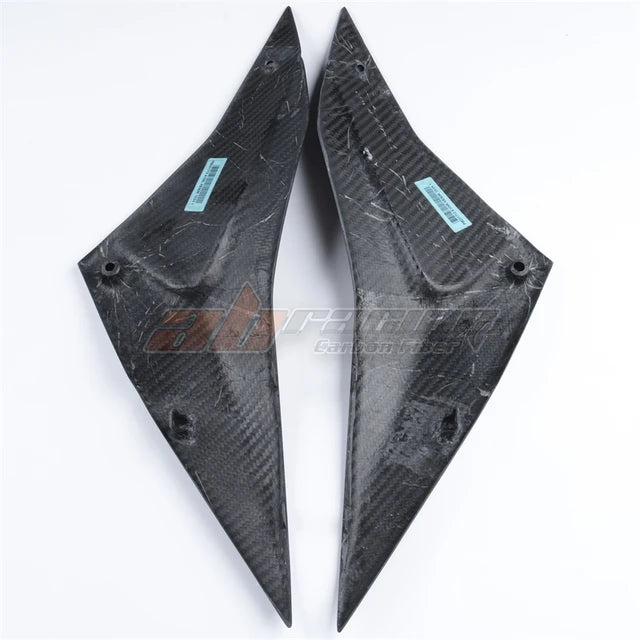
The back or inner side of a carbon fiber part can reveal important details about its construction. Dry carbon parts typically feature consistent weave patterns, uniform construction, and minimal excess resin. Wet carbon parts may show thicker resin buildup, fiberglass reinforcement, or a less refined finish. These differences can help identify how the component was manufactured.
Some lower-cost wet carbon fiber parts use fiberglass beneath the outer carbon fiber layer. While this is a legitimate construction method, it differs from a full carbon fiber part. Dry carbon components are typically made entirely from multiple layers of carbon fiber, helping reduce weight and improve overall performance.
While price alone cannot confirm how a carbon fiber part is made, it can offer useful clues. Dry carbon fiber parts typically cost more because they require specialized materials, equipment, and manufacturing processes. If a product is marketed as dry carbon but is priced similarly to standard wet carbon parts, it is worth reviewing the specifications more closely.
When purchasing motorcycle parts, durability is often just as important as appearance and weight. Carbon fiber components are regularly exposed to UV radiation, rain, road debris, heat cycles, vibration, and mechanical stress. Understanding how dry and wet carbon fiber performs under these conditions can help riders make a more informed decision.
When manufactured correctly, dry carbon fiber is exceptionally durable and designed to withstand demanding conditions. Its performance benefits include:
Because it contains fewer voids and more consistent fiber alignment, dry carbon often performs better under repeated stress cycles. This is one of the reasons it is widely used in aerospace and professional motorsports.
Dry carbon also performs well in high-temperature environments when manufactured using appropriate resin systems. It is commonly used in components such as exhaust heat shields, belly pans, engine covers, and fairing inserts. However, due to its rigidity, dry carbon can be more susceptible to cracking under sharp impacts or crash damage.
Wet carbon fiber is also highly durable and can provide many years of reliable service when properly manufactured and maintained. Modern wet carbon components often feature:
For most street riders, the durability difference between dry and wet carbon may not be immediately noticeable during normal use.
One common concern is UV exposure and yellowing. Carbon fiber itself does not turn yellow; in most cases, the resin or clear coat is responsible for discoloration over time. High-quality UV-resistant coatings help prevent fading, yellowing, and loss of gloss.
Because wet carbon contains slightly more resin, it may absorb impact energy somewhat better than dry carbon in certain situations. However, the actual outcome depends on the part's design and the severity of the impact. Like dry carbon, wet carbon can also perform well near engines and exhaust systems when manufactured using high-temperature resin systems.
While both materials offer significant advantages over traditional plastics and metals, they are designed with different priorities in mind.
Dry carbon prioritizes maximum performance and minimum weight.
Wet carbon focuses on balancing aesthetics, durability, and affordability.

The table below summarizes the major differences.
Feature |
Dry Carbon Fiber |
Wet Carbon Fiber |
|
Manufacturing Method |
Prepreg + Autoclave |
Wet Layup / Resin Infusion |
|
Weight |
Extremely Light |
Slightly Heavier |
|
Fiber-to-Resin Ratio |
High |
Lower |
|
Strength-to-Weight Ratio |
Excellent |
Very Good |
|
Structural Performance |
Motorsport Grade |
Street Performance |
|
Surface Appearance |
Sharp, Technical |
Deep Gloss Finish |
|
Consistency |
Very High |
Good |
|
Production Cost |
High |
Lower |
|
Availability |
Limited |
Widely Available |
|
Typical Applications |
Racing, Aerospace, Supercars |
Motorcycles, Cars, Aftermarket Parts |
|
Repairability |
More Specialized |
Easier |
|
Price |
Premium |
More Affordable |
The right choice ultimately depends on your goals, budget, and how you use your motorcycle. There is no universal winner between dry carbon and wet carbon because each offers advantages that appeal to different types of riders. Understanding your priorities will help determine which option delivers the best value for your specific needs.
If your motorcycle spends a significant amount of time on the track, dry carbon fiber is often the preferred choice. Its lower weight can contribute to improved acceleration, quicker direction changes, and a better overall strength-to-weight ratio. These benefits become increasingly important in competitive riding environments where even small performance gains can make a noticeable difference. This is one of the reasons dry carbon fiber remains the material of choice in many professional motorsport applications.
Both dry carbon and wet carbon can look stunning on a show bike. Dry carbon fiber offers an added level of exclusivity and prestige due to its advanced manufacturing process and higher cost. However, wet carbon fiber also delivers the distinctive carbon fiber appearance that many enthusiasts seek, often at a much more accessible price point. As a result, many builders choose wet carbon parts because they provide an impressive visual impact without significantly increasing the overall project budget.
For most street riders, the performance advantages of dry carbon fiber may not be readily apparent in everyday riding. In these cases, wet carbon fiber often provides the best balance of appearance, durability, affordability, and availability. It allows riders to enjoy the premium look and weight-saving benefits of carbon fiber without the higher investment associated with dry carbon parts.
Wet carbon fiber remains one of the most practical upgrades available for riders seeking a combination of style and performance. It offers genuine carbon fiber construction, reduced weight compared to many factory parts, premium aesthetics, and excellent durability. For many motorcycle owners, wet carbon fiber represents the ideal middle ground between performance gains, visual appeal, and overall value.
For most street riders, the difference between dry and wet carbon fiber is unlikely to transform the riding experience.
While dry carbon offers measurable weight savings, many riders are primarily upgrading for aesthetics, personalization, and overall quality. In these situations, a well-made wet carbon part can provide much of the same visual appeal at a significantly lower cost.
Unless you're actively chasing lap times, a high-quality wet carbon part may provide nearly everything you're looking for.
That is why wet carbon remains the dominant choice in the aftermarket motorcycle industry.
Dry carbon fiber and wet carbon fiber both represent significant advancements over traditional motorcycle materials, but they serve different purposes.
Dry carbon is the premium solution. Through prepreg construction and autoclave curing, it delivers exceptional weight savings, superior strength-to-weight ratios, and the performance characteristics demanded by professional motorsports and aerospace industries.
Wet carbon takes a different approach. Using a more accessible manufacturing process, it provides genuine carbon fiber construction, impressive durability, and the unmistakable carbon fiber appearance that enthusiasts love, all at a more attainable price point.
For racers and performance-focused builders, dry carbon may justify its higher cost through measurable weight savings and structural advantages.
For the majority of riders, however, high-quality wet carbon offers an outstanding combination of aesthetics, durability, and value.
Ultimately, the best choice isn't about which material is objectively better; it's about selecting the one that best aligns with your motorcycle build, riding style, and budget.
Whether you choose dry carbon or wet carbon, both represent a significant upgrade that can enhance the look, feel, and character of your motorcycle.
The primary difference lies in the manufacturing process. Dry carbon uses prepreg carbon fiber cured in an autoclave under heat and pressure, while wet carbon uses manually applied resin during production. This results in dry carbon being lighter and offering a higher strength-to-weight ratio.
Yes. Dry carbon typically contains less resin and a higher percentage of carbon fiber, making it significantly lighter than an equivalent wet carbon part.
Look for terms such as prepreg carbon fiber, autoclave cured, or aerospace-grade construction. Genuine dry carbon parts are usually lighter, more expensive, and feature extremely precise weave patterns.
For most exterior applications, wet carbon offers an excellent balance of appearance, durability, and affordability. Dry carbon is generally preferred when minimizing weight is the primary objective.
For most daily riders and drivers, the performance benefits may not justify the higher cost. However, enthusiasts seeking the lightest possible parts and premium motorsport-grade construction may find dry carbon worthwhile.
Dry carbon fiber is not always dramatically stronger in absolute terms, but it typically offers a better strength-to-weight ratio. Because it contains less resin and a higher concentration of carbon fiber, dry carbon can achieve similar or greater strength while weighing less than an equivalent wet carbon part.
Dry carbon fiber requires specialized materials, precision molds, vacuum systems, autoclaves, and highly skilled manufacturing processes. These additional production requirements increase manufacturing costs, which is why genuine dry carbon parts are typically priced higher than wet carbon alternatives.
Yes. Wet carbon fiber is widely used on performance motorcycles and automobiles for body panels, trim pieces, fenders, covers, and other exterior parts. While professional racing teams often prefer dry carbon for maximum weight savings, high-quality wet carbon parts still provide excellent durability, weight reduction, and visual appeal for most enthusiasts.