Read More

Your shopping bag is empty
Go to the shop
If you love riding, you have probably noticed that weight plays a big role in how your motorcycle feels and performs. Whether you are riding in the city, hitting the track, or just riding casually, even small weight changes in the bike can make a major difference. A lightweight build starts with lighter parts. And when you hear lightweight, carbon fiber is hard to ignore. That’s why carbon fiber has become so popular in the motorcycle world.
Carbon fiber is super light and also very strong. When used in the right parts of your bike, it can improve acceleration, handling and even fuel efficiency of your motorcycle.
In this blog, we’ll break down what carbon fiber is, how much it weighs, compared to other materials and why reducing weight matters so much. We will also look at how it affects your bike’s performance and how much weight you can actually save in everyday conditions.
Carbon fiber is a composite material, meaning it is made of carbon fibers embedded in and bonded together by a resin matrix to form a solid structure.
Carbon fiber composites typically have a density of around 1.5 to 1.8 g/cm³, making them roughly 70–80% lighter than steel and about 30–40% lighter than aluminum, while offering significantly higher strength-to-weight performance.
To give you a clearer idea, if you were to use carbon fiber to replace a steel part, you’d be making the part much lighter. For example, a carbon fiber fairing could weigh up to 50% less than one made from aluminum or plastic. This significant weight reduction improves the bike’s overall performance in multiple ways.
Here’s a more complete and polished version of how much weight the carbon parts reduce, with added parts like windscreen, mudguard, and side panels:
Carbon Fiber Fairings and Bodywork:
Carbon fiber fairings can be up to 50% lighter than traditional fiberglass or plastic, helping improve overall performance.
Carbon Fiber Windscreen:
A carbon fiber windscreen is lighter than standard options and also adds rigidity, which can improve aerodynamics and reduce vibration at higher speeds.
Carbon Fiber Side Panels:
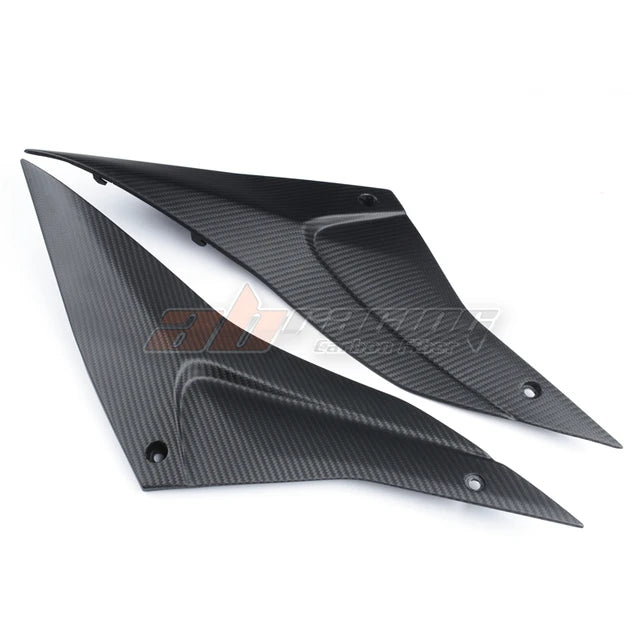
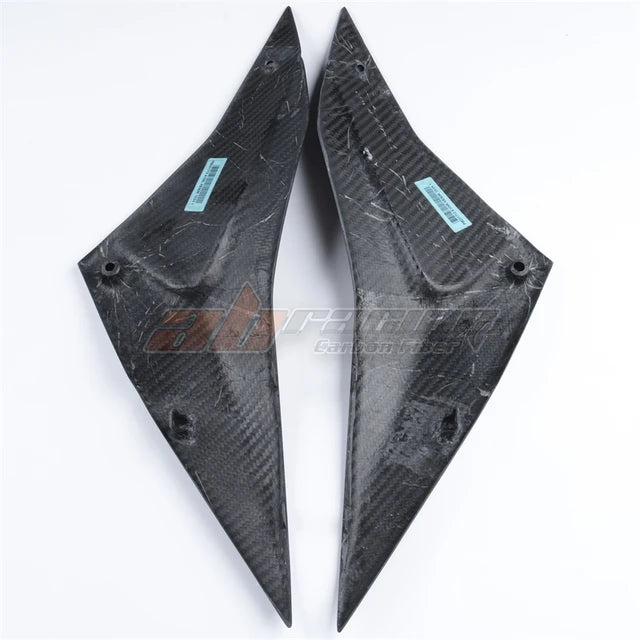
Replacing stock side panels with carbon fiber versions reduces weight while maintaining strength, improving handling and delivering a cleaner, more premium look.
Carbon Fiber Mudguards (Fenders):
Carbon fiber mudguards are lighter and more durable, reducing unsprung weight slightly and improving overall ride feel.
Carbon Fiber Wheels:
A set of carbon fiber wheels can save around 2–4 kg compared to aluminum wheels, making a big difference in acceleration and handling.
Carbon Fiber Swingarms:
Carbon fiber swingarms can reduce weight compared to traditional metal ones, and their stiffness helps improve suspension response and handling.
Carbon Fiber Frames:
Some premium bikes use carbon fiber frames in place of steel or aluminum, significantly reducing weight without sacrificing strength.
Overall, switching to carbon fiber parts can reduce a motorcycle’s total weight by around 10–15%. This makes the bike more responsive, agile, and quicker on the road.
To understand how carbon fiber stacks up, let’s compare its weight with other materials commonly used in motorcycles, such as steel, aluminum, and magnesium.
Steel is known for its strength and is frequently used in structural components such as frames. However, it is relatively heavy. Here's a comparison of how it stacks up:
Carbon fiber weight: 1.5–2 g/cm³
Steel weight: 7.85 g/cm³
This makes carbon fiber roughly 75–80% lighter than steel for the same volume. Because of its high strength-to-weight ratio, it is widely used in performance applications like frames and swingarms, where reducing weight is critical.
Aluminum is a popular choice for many motorcycle parts because it is lighter than steel. However, carbon fiber is even lighter than aluminum:
Carbon fiber weight: 1.5–2 g/cm³
Aluminum weight: 2.7 g/cm³
This makes it roughly 30–45% lighter for the same volume, which is why it’s widely used in high-performance components like wheels, fairings, and frames.
Magnesium is an extremely lightweight material used in some high-performance bikes. Here's how it compares to carbon fiber:
Carbon fiber weight: 1.5–2 g/cm³
Magnesium weight: 1.74 g/cm³
Carbon fiber typically offers higher strength-to-weight and stiffness-to-weight performance, which is why it’s preferred for many high-performance components. Magnesium is still widely used in parts like wheels due to its low weight and good vibration damping, but carbon fiber often provides better overall efficiency in weight-critical applications.
The weight of your bike impacts many aspects of its performance. Whether you're riding on the streets or on a racetrack, lighter bikes accelerate faster, handle better, and are more fuel-efficient.
A lighter bike is simpler and easier to control while riding. When you opt to replace heavier parts with carbon fiber, the bike feels more agile, making it easier to turn and handle smoothly. You will notice this most in tight corners or when you need to react quickly while riding.
We are all aware that the lighter the bike, the faster it can accelerate. The engine doesn’t have to work as hard, which helps the bike accelerate faster. This means smoother acceleration and a more responsive ride overall.
A lighter motorcycle is also easier to slow down. With less weight, the brakes can bring the bike to a stop, more efficiently, reducing stopping distance. On top of that, lighter bikes tend to feel more stable at higher speeds, especially when cornering.
Now, let’s look at real-world examples of how carbon fiber weight reduction affects a motorcycle’s performance:
Carbon fiber is used in several key parts to reduce weight without compromising strength. These include:
Fairings: These outer parts of the bike, made from carbon fiber, are much lighter than traditional plastic or fiberglass fairings.
Wheels: Carbon fiber wheels reduce rotating mass, which is crucial for improving acceleration, handling, and braking.
Swingarms: The swingarm connects the rear wheel to the rest of the bike. A carbon fiber swingarm can reduce weight and improve suspension performance.
Frames: Some motorcycles feature carbon fiber frames, which provide strength and durability while being much lighter than steel frames.
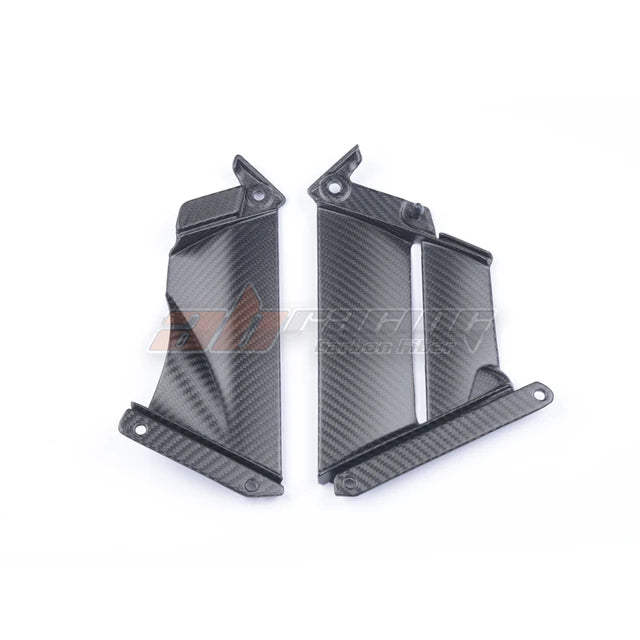
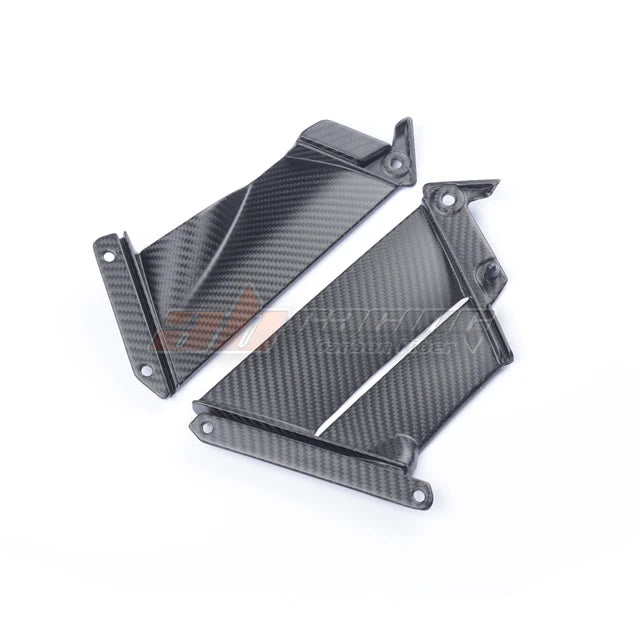
Engine covers, chain guards, and other small parts: These parts are often made of carbon fiber to reduce overall bike weight.
The impact of these weight reductions is felt in acceleration, braking, and overall handling, making the bike faster, more responsive, and easier to control.
Weight to Power Ratio
One of the most important factors in motorcycle performance is the weight-to-power ratio. This refers to how much power the engine produces relative to the bike's total weight.
When you have less weight and more power on your bike, it naturally feels quicker and easier to handle. Replacing heavier parts with carbon fiber ones improves the balance, helping the bike accelerate more quickly, handle more smoothly, and feel more responsive on the road.
At the end of the day, making your bike lighter with carbon fiber parts is one of the easiest ways to improve its performance. Whether you want more speed, smoother handling, or better fuel efficiency, it’s something you will clearly notice every time you ride.
When you swap out heavier parts for carbon fiber, you get:
Faster acceleration
Smoother and more precise handling
Better braking
More stability at higher speeds
As motorcycles continue to evolve, lightweight materials like carbon fiber are becoming more common, helping riders enjoy bikes that are quicker, more efficient, and a lot more fun to ride.
Carbon fiber is very lightweight, with a density of around 1.5–2 g/cm³. That’s much lighter than most metals used in motorcycles, which is why it’s widely used in performance parts.
Yes, reducing weight is one of the biggest advantages of carbon fiber. When it replaces heavier materials like steel or aluminum, it can significantly reduce your bike's overall weight. This reduction not only makes the bike easier to handle but also improves acceleration, braking, and overall efficiency.
No, carbon fiber is lighter than aluminum. In many applications, it can be around 30-45% lighter while still offering excellent strength and rigidity. This combination of low weight and high performance is what makes it a popular choice for high-performance motorcycle parts.
Carbon fiber makes the bike lighter, which improves acceleration, handling, and braking. It can also improve fuel efficiency and give the bike a more premium, performance-focused feel.
The amount of weight saved depends on which parts you replace, but in most cases, carbon fiber can reduce a bike’s overall weight by around 10–15%. Replacing larger parts can result in even greater weight reduction.
Not always. While it’s commonly used in fairings, wheels, frames, and swingarms, it’s not ideal for parts that need flexibility or are exposed to heavy impact.
Yes, carbon fiber is generally more expensive than traditional materials like steel or aluminum. This is mainly because of its complex manufacturing process, which involves precise layering, curing, and specialized techniques. While the upfront cost is higher, many riders consider it worthwhile due to the performance benefits and weight savings it offers.
Carbon fiber parts improve performance by making the bike lighter and more rigid. This helps it accelerate more quickly, handle more precisely, and feel more responsive overall. You’ll especially notice the difference at higher speeds or during more aggressive riding.
Carbon fiber is very strong and holds up well under normal riding conditions. It resists wear and maintains its shape under stress. However, unlike metal, it is more brittle, which means a sharp or heavy impact can cause it to crack rather than bend.
Yes, carbon fiber can be repaired, but the process is more specialized and complex than metal repairs. Restoring both strength and appearance is a challenge in itself. It requires proper techniques and expertise, so it’s usually best to have repairs done by professionals.