Read More

Your shopping bag is empty
Go to the shop
If you are replacing or upgrading motorcycle or car parts, carbon fiber and ABS plastic are two materials you will often come across. Both are commonly used for fairings, fenders, tank covers, winglets, chain guards, and other vehicle components, but they offer very different benefits.
So, which material should you choose? It depends on your priorities. In this guide, we compare ABS plastic vs. carbon fiber based on weight, strength, durability, price, appearance, maintenance, installation, UV resistance, and other important factors to help you make the right choice.
Carbon fiber and ABS plastic are commonly used for motorcycle parts, but they offer different benefits. Carbon fiber is a lightweight and rigid composite material often chosen for performance-focused upgrades, while ABS is a flexible thermoplastic widely used for practical and affordable body parts. Let’s take a closer look at how these materials differ and which one is the right choice for your motorcycle.
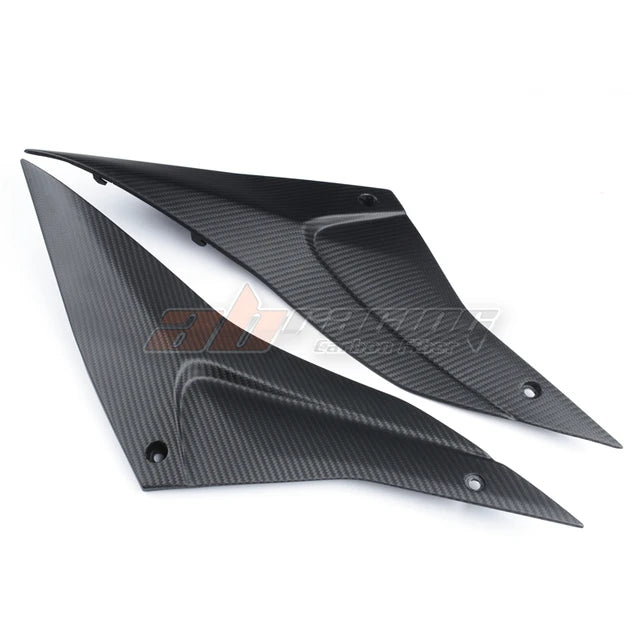
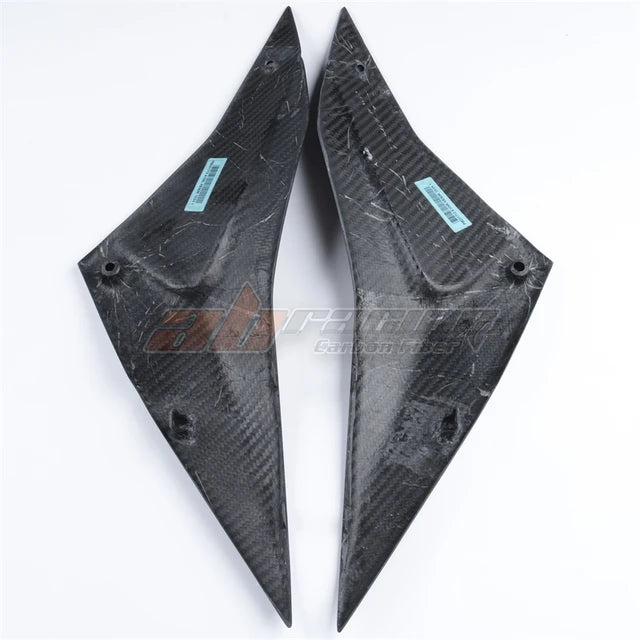
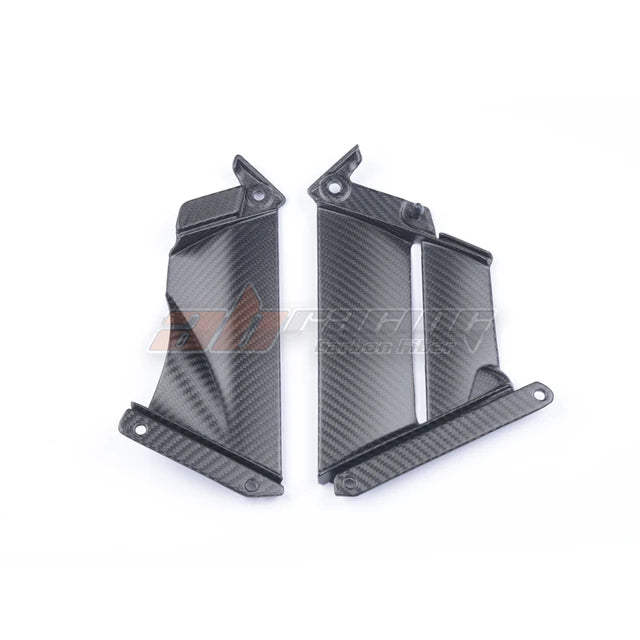
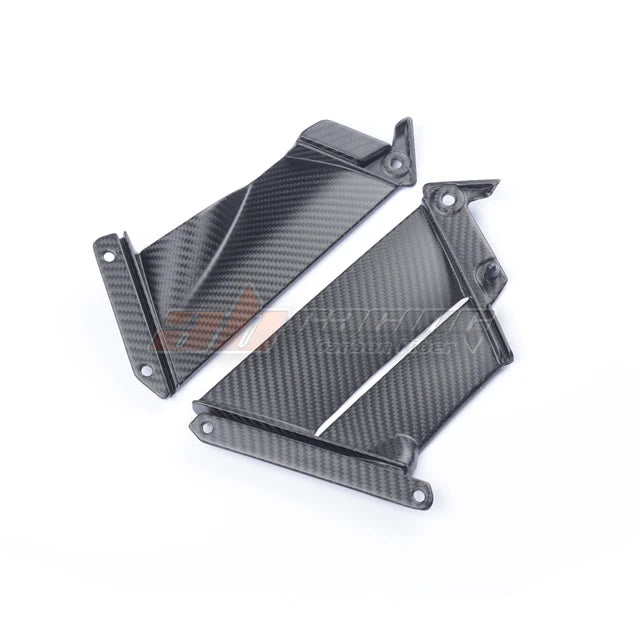
Carbon fiber is a composite material commonly used to make performance and exterior motorcycle parts. It is made by arranging thin carbon fibers in layers, combining them with resin, and curing them in a mold to create the required shape.
This manufacturing process creates a solid composite structure and gives genuine carbon fiber its recognizable woven or forged appearance. Unlike ABS, carbon fiber is not molded as a single plastic material, making its construction and overall properties very different from standard motorcycle bodywork.
Very Rigid: Carbon fiber does not bend or flex easily, helping the part hold its shape.
Heat Resistant: It expands and changes shape very little when temperatures change.
Corrosion Resistant: Carbon fiber does not rust like steel.
Unique Pattern: Real carbon fiber has a recognizable woven or forged pattern.
Long-Lasting Material: Good-quality carbon fiber can handle regular use for years when properly maintained.
Reduces Weight: Carbon fiber parts are lightweight, which can help reduce the overall weight of your motorcycle or car.
Easy to Clean: Finished carbon fiber surfaces are generally easy to clean with mild automotive soap and a soft microfiber cloth.
Premium Look: Carbon fiber can instantly give your vehicle a more premium and performance-focused appearance.
Ideal for Performance Upgrades: Its low weight makes it a popular choice for sports bikes, performance cars, and racing vehicles.
Great for Upgrading Stock Parts: You can replace selected factory parts with carbon fiber without changing the entire bodywork.
For motorcycle and car owners, carbon fiber is commonly used for:
ABS (acrylonitrile butadiene styrene) is a thermoplastic commonly used to make body and exterior parts. Unlike carbon fiber, which is built from layers of fiber and resin, ABS is heated and molded into the required shape as a single plastic material.
This manufacturing process allows motorcycle parts to be made with detailed curves, mounting tabs, holes, and complex designs while maintaining consistent fitment. This is why ABS has long been a common material for both factory and aftermarket motorcycle bodywork.
Flexible: ABS can bend slightly under pressure, making it less likely to crack from small bumps.
Impact Resistant: It handles everyday knocks and minor impacts well.
Easy to Shape: ABS can be molded into complex shapes, curves, and mounting points.
Smooth Surface: It can be easily painted, wrapped, or given different finishes.
Easy to Produce: ABS parts can be manufactured in large quantities, which helps keep them widely available.
Affordable: ABS parts are generally much cheaper to buy and replace than carbon fiber parts.
Easy to Replace: Fairings and other ABS body parts are widely available for many motorcycles and cars.
Good for Daily Use: ABS is a practical choice for everyday vehicles where minor bumps and scratches are more likely.
Beginner-Friendly: Its flexibility can make ABS parts easier to align and install.
Easy to Customize: You can paint, wrap, hydro-dip, or add graphics to ABS parts to match your preferred style.
For motorcycle and car owners, ABS is commonly used for:
When comparing ABS plastic vs. carbon fiber durability, there is more to consider than simply asking which material is stronger. Carbon fiber is lightweight, strong, and highly rigid, making it a popular choice for performance-focused parts. ABS plastic is more flexible, affordable, and better at absorbing smaller everyday impacts. Factors such as weight, strength, price, appearance, maintenance, UV resistance, and installation can all affect your decision. Ultimately, the better choice depends on your vehicle, how you use it, and what you expect from the part.
Let's look at each difference in more detail.
Weight is one of the biggest differences between carbon fiber and ABS plastic. Both materials are lightweight, but carbon fiber offers much greater strength and stiffness for its weight. For riders looking to reduce weight on a performance motorcycle, replacing multiple ABS parts with carbon fiber can make a more noticeable difference.
|
Weight Factor |
Carbon Fiber |
ABS Plastic |
|
Typical density |
~1.5–1.6 g/cm³ |
~1.0–1.1 g/cm³ |
|
Strength-to-weight |
Strong despite low weight |
Decent for daily use |
|
Stiffness-to-weight |
Stays firm when lightweight |
Needs more material |
|
Weight-saving potential |
Better for weight reduction |
Limited weight advantage |
|
Best suited for |
Performance-focused builds |
Everyday street use |
Bottom line: Carbon fiber is the better choice when you want to keep a component lightweight while also getting high strength and stiffness.
Carbon fiber and ABS handle force differently. Carbon fiber is extremely stiff and strong for its weight, so it does not bend easily. ABS is less rigid but more flexible, allowing it to absorb some everyday bumps by bending rather than immediately cracking.
|
Strength Factor |
Carbon Fiber |
ABS Plastic |
|
Stiffness |
Holds shape firmly |
Allows some movement |
|
Flexibility |
Minimal flex |
Bends more easily |
|
Strength-to-weight |
Strong without added weight |
Adequate for regular use |
|
Small impact behavior |
Resists bending; may crack |
Flexes to absorb impact |
|
Hard impact behavior |
May crack or delaminate |
May bend or crack |
|
Best suited for |
Performance-focused parts |
Everyday body panels |
Bottom line: Carbon fiber is better for strength and rigidity, while ABS can be more forgiving when dealing with smaller everyday impacts.
If appearance matters to you, the difference is usually easy to see up close. Real carbon fiber gets its pattern from the actual fibers underneath the clear coat, giving it natural depth. ABS can copy the carbon look using printing, wrapping, or hydro dipping, but it does not have the same genuine fiber structure.
|
Appearance Factor |
Carbon Fiber |
ABS Plastic |
|
Natural appearance |
Visible woven fibers |
Smooth plastic surface |
|
Popular styles |
Twill, plain weave, forged |
Painted, wrapped, textured |
|
Visual depth |
Noticeable 3D depth |
Varies with surface finish |
|
Carbon pattern |
Made from real fibers |
Pattern can be replicated |
|
Overall look |
Premium & performance-focused |
Versatile & customizable |
Bottom line: Choose carbon fiber if you want the authentic carbon look. Choose ABS if you want more freedom to customize the color and appearance at a lower cost.
Price is one of the clearest differences between carbon fiber and ABS. ABS is easier to mass-produce, which keeps manufacturing and replacement costs relatively low. Carbon fiber takes more time, specialized materials, and labor to manufacture, so genuine carbon fiber parts usually come at a premium price.
|
Cost Factor |
Carbon Fiber |
ABS Plastic |
|
Upfront cost |
Premium-priced option |
More budget-friendly |
|
Manufacturing process |
Requires skilled production |
Designed for mass production |
|
Tooling & production |
Requires specialized processes |
Economical at larger volumes |
|
Repair cost |
More expensive to repair |
Cheaper to repair |
|
Replacement cost |
Costlier to replace |
Affordable to replace |
|
Long-term value |
Better for premium builds |
Better for practical builds |
Bottom line: ABS is the better option if budget is your main concern. Carbon fiber is worth considering when weight, performance, and premium appearance justify the higher price.
Neither material is difficult to maintain, but carbon fiber needs slightly more attention. Most exterior carbon fiber parts have a clear coat that protects the resin and keeps the weave looking glossy. ABS is generally simpler to care for and can usually be cleaned like other plastic or painted body panels.
|
Maintenance Factor |
Carbon Fiber |
ABS Plastic |
|
Routine cleaning |
Gentle cleaning preferred |
Simple regular cleaning |
|
Protective finish |
Helps protect clear coat |
Adds surface protection |
|
UV care |
Needs UV protection |
Benefits from UV protection |
|
Scratch visibility |
More visible on gloss finishes |
Varies by paint or finish |
|
Maintenance level |
Requires occasional extra care |
Easier to maintain |
|
Regular inspection |
Check finish and cracks |
Check surface and mounting points |
Bottom line: ABS is slightly easier to maintain, while carbon fiber needs some extra care to keep its clear coat and finish looking their best.
Both carbon fiber and ABS can spend years outdoors, but constant sunlight can eventually affect them. On carbon fiber parts, UV exposure mainly affects the resin and clear coat. ABS can also fade, discolor, or become brittle after long-term exposure, especially if it does not have proper UV protection.
|
UV & Longevity Factor |
Carbon Fiber |
ABS Plastic |
|
Main area affected by UV |
Resin and clear coat |
Exposed plastic surface |
|
UV protection recommended |
Helps prevent surface damage |
Helps reduce fading |
|
Possible UV damage |
Yellowing, haze, or fading |
Fading, discoloration, or brittleness |
|
Protected outdoor durability |
Performs well when protected |
Suitable for regular outdoor use |
|
Garage storage beneficial |
Helps preserve the finish |
Helps prevent early fading |
Bottom line: Both materials can last for years, but proper UV protection and covered or garage storage can significantly improve their lifespan.
ABS is generally easier for beginners because it has some flexibility when you are lining up mounting holes, tabs, and clips. Carbon fiber is much more rigid, so the part should fit correctly without being forced into position.
|
Installation Factor |
Carbon Fiber |
ABS Plastic |
|
Flexibility during fitting |
Limited movement during fitting |
Easier to flex and position |
|
Beginner-friendly |
Requires some installation care |
Easier for first-time installers |
|
Can be forced into alignment? |
Should not be forced |
Allows slight adjustment |
|
Overtightening risk |
More sensitive to overtightening |
Handles tightening better |
|
Test-fitting recommended |
Important before installation |
Helps ensure proper alignment |
|
Installation care |
Needs careful handling |
Easier to handle during installation |
Bottom line: ABS is generally easier for beginners to install, while carbon fiber requires more careful alignment and tightening.
Carbon fiber is strongly associated with racing, but simply changing from ABS to carbon fiber does not automatically improve aerodynamics. The shape and design of the part determine how air moves around the vehicle. Carbon fiber's advantage is its ability to remain lightweight while providing high rigidity.
|
Aerodynamic Factor |
Carbon Fiber |
ABS Plastic |
|
Rigidity |
Maintains a firm structure |
Allows some flexibility |
|
Shape retention under load |
Holds shape very well |
Holds shape under normal loads |
|
Weight |
Lightweight while staying rigid |
Lightweight but less rigid |
|
Suitable for winglets |
Ideal for rigid winglets |
Works with proper support |
|
Suitable for splitters/diffusers |
Well suited for performance parts |
Works with proper design |
|
Performance use |
Widely used in performance builds |
Common in street applications |
Bottom line: The design of the part determines aerodynamics, but carbon fiber's high stiffness and low weight make it a popular choice for performance-focused aerodynamic components.
Both materials give you plenty of styling options, but they achieve them differently. Carbon fiber is usually chosen because owners want to see the actual fiber pattern, while ABS acts more like a blank canvas that can be painted, wrapped, printed, or hydro-dipped.
|
Finish Factor |
Carbon Fiber |
ABS Plastic |
|
Gloss finish |
Available with glossy clear coat |
Available with glossy clear coat |
|
Matte finish |
Available with matte coating |
Available with matte coating |
|
Twill weave |
Made with genuine woven fibers |
Can imitate woven pattern |
|
Forged carbon look |
Available as genuine forged carbon |
Can replicate forged appearance |
|
Custom paint |
Can be custom painted |
Easy to paint and customize |
|
Color matching |
Can match selected colors |
Easier to color-match |
Bottom line: Carbon fiber is ideal for an authentic premium composite finish, while ABS gives you more affordable options for colors, graphics, and customization.
Changing body parts can influence how future buyers see your motorcycle or car, but the material alone does not decide resale value. High-quality carbon fiber parts may appeal to performance enthusiasts, while clean OEM or OEM-style ABS panels can appeal to buyers who prefer an original look.
|
Resale Factor |
Carbon Fiber |
ABS Plastic |
|
Enthusiast appeal |
More attractive to performance buyers |
Appeals to practical buyers |
|
Premium perception |
Adds a premium feel |
Maintains a standard look |
|
OEM-style appearance |
Varies by part and design |
Closely matches factory styling |
|
Value of quality installation |
Strongly affects overall value |
Helps maintain overall value |
|
Poor fitment impact |
Can reduce buyer appeal |
Can affect factory-like appearance |
|
Keeping original parts |
Helps preserve resale options |
Useful for future replacement |
Bottom line: Quality carbon fiber can add enthusiast appeal, but good fitment, condition, and installation matter far more to resale value than the material alone.
After comparing ABS plastic vs. carbon fiber across weight, strength, durability, cost, and appearance, the better choice depends on how you use your vehicle. Carbon fiber is better suited to performance and premium upgrades, while ABS is a practical option for everyday use and budget-friendly replacements.
Want to reduce the weight of selected parts
Prefer high strength and rigidity
Want a genuine carbon fiber appearance
Are building a performance-focused motorcycle or car
Want lightweight aerodynamic components
Prefer twill weave or forged carbon finishes
Are comfortable paying more for premium parts
Want to upgrade fenders, guards, covers, or body panels
Carbon fiber is a good choice when weight, performance, rigidity, and appearance matter most. You do not have to replace every panel either, adding carbon fiber to selected parts can provide some of its benefits while keeping the overall upgrade cost manageable.
Want affordable replacement parts
Use your motorcycle or car regularly
Prefer flexible and impact-resistant body panels
Want easier installation
Need inexpensive replacement fairings
Plan to paint, wrap, or customize the parts
Prefer lower maintenance
Are working with a limited budget
ABS is better suited to daily use, affordable repairs, and practical customization. Its flexibility and lower replacement cost make it especially useful for commuters, beginner riders, and vehicles where body panels may experience everyday bumps or scratches.
You can also use both materials on the same vehicle. For example, you could keep the main ABS fairings while adding a carbon fiber fender, chain guard, tank cover, or winglets. This gives you the practicality of ABS along with the lightweight and premium look of carbon fiber.
Usually, yes. Real carbon fiber has visible depth because the weave is part of the actual material, while carbon-pattern ABS uses a printed, wrapped, or hydro-dipped finish. They may look similar from a distance, but genuine carbon fiber is usually easier to recognize up close.
Not exactly. Carbon fiber is much stiffer and offers excellent strength, but a hard localized impact can cause cracking or delamination. ABS is more flexible, so it can sometimes absorb smaller impacts by bending instead of cracking.
Both can handle outdoor conditions when properly made and protected. Carbon fiber needs a good UV-resistant clear coat, while ABS benefits from UV stabilizers or protective coatings. Long-term exposure to sunlight and extreme temperatures can affect either material.
Both ABS and quality carbon fiber can last for many years. Their lifespan depends on UV exposure, weather, manufacturing quality, maintenance, impacts, and storage. Keeping the vehicle covered or garaged can significantly improve the life of either material.
ABS is generally easier because it has more flexibility when aligning mounting points. Carbon fiber is rigid and should never be forced into place, so careful test-fitting and proper tightening are more important during installation.
Yes. Many motorcycles combine ABS fairings with carbon fiber fenders, guards, covers, or winglets. It is a practical way to get the look and weight benefits of carbon fiber without replacing every plastic component.